
How does the EU Parliament work?
Est ablished in 1979, the European parliament is the second-largest in the world, after the Indian Parliament, composed of 766 elected members from an electorate of nearly 400 million people. Members of the European Parliament (MEPs) sit in eight political groups, the largest currently being the centre-right European People’s Party (blue). The Liberal Democrats are part of the Alliance of Liberals and Democrats for Europe Group (yellow), and our single MEP is Catherine Bearder, representing the South East.
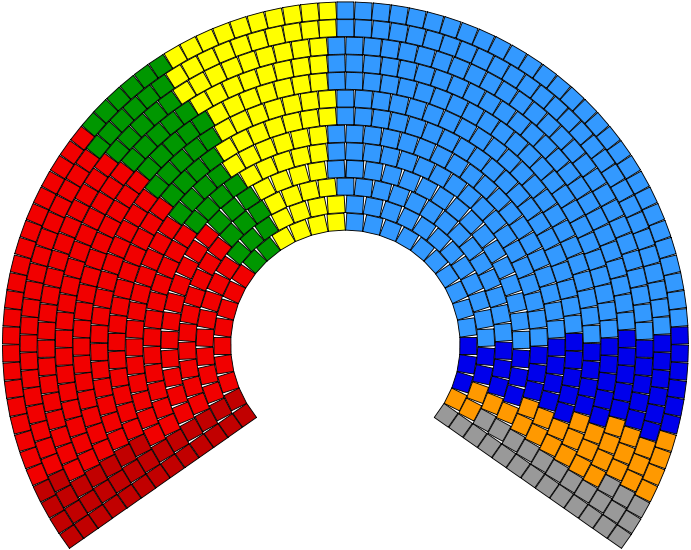
The ALDE party’s values are based on the fundamental principles of freedom, the rule of law, human rights, tolerance and solidarity. We want to create a fair and open society, enabling everyone to fulfil their potential in a common market. We believe in sustainable development and care for the environment, along with a more accountable and transparent Europe.
The short animation below shoes how decision-making is carried out in the EU and how the European Council, Council of Ministers, Commission and Parliament all work together.
The Lib Dems want Britain to stay in the European Union.
Figures from January 2014 show that 920,000 young people (aged 16-24) are unemployed – that’s 20%. Around 3 million jobs in this country are linked to the EU in some form and thousands of businesses depend on EU countries to export their products to. Leaving the EU would make it even harder for young people to find work. Additionally, around half of our exports go to EU members and half of our imports come from the union. Leaving would make it harder for British businesses to export their goods and services, and could even increase the price of imports we demand.
I’m IN because as a student I get opportunities to access funding through the EU on an Erasmus grant and through that I can study abroad in France. And I get to study with people from all over the world, and that’s all thanks to the EU – Kavya Kaushik, former Liberal Youth co-chair.
The Erasmus scheme provides an opportunity for higher education students to study and work abroad as part of their degree. Without the EU, this wouldn’t be open for the UK.
The Conservatives are far from united on the EU. David Cameron wants to renegotiate Britain’s agreement with the EU and hold a referendum by 2017, but… the party is fiercely divided. In January 2014 95 Conservative MPs – that’s nearly a third of all Tory MPs – wrote to the PM urging him to give Parliament the ability to block future EU laws and remove existing ones.
Labour, meanwhile, have not even made a solid commitment.


 Kingston Liberal Youth